VQCC Leads Security Research
in European QuantumPUF Project

The Vigo Quantum Communication Center (VQCC) participates in QuantumPUF, a European research project aimed at developing a new generation of quantum and photonic technologies to verify the authenticity of physical objects and documents and make counterfeiting more difficult.
The project addresses the growing global challenge of product and document counterfeiting, which affects sectors ranging from pharmaceuticals and food to electronics and consumer goods. Emerging digital threats and potential advances in quantum computing are creating new challenges for existing authentication systems, highlighting the need for more secure and reliable solutions.
UVigo leads the security requirements work package
Through the VQCC, the University of Vigo is the only Spanish institution in the QuantumPUF consortium and leads Work Package 5 (WP5), dedicated to security requirements and their practical implementation.
The work is led by Davide Rusca, VQCC researcher and head of UVigo’s contribution to the project. His team will assess the security guarantees offered by the new devices, develop methodologies to evaluate their resistance to counterfeiting, identify potential vulnerabilities, and study how they can be protected against different types of attacks, including those exploiting imperfections in physical devices.
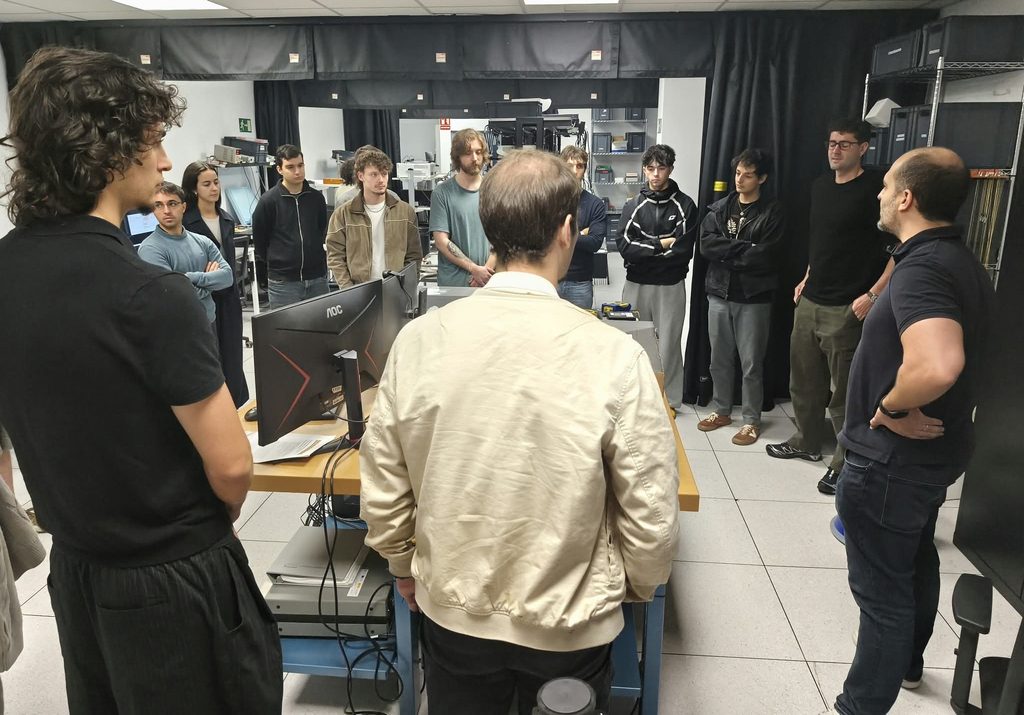
“Manufacturing a device that is difficult to reproduce is not enough: it is also necessary to determine under which conditions it can provide security guarantees and how these can be verified in practice,” explains Rusca. He highlights one of the project’s main challenges: “connecting theoretical security models with the actual behaviour of experimental devices.”
The VQCC team will work closely with researchers from Instituto de Telecomunicações in Lisbon and the University of Geneva to integrate security analysis throughout the development of these authentication technologies. This contribution builds on the centre’s expertise in quantum communication security and in identifying vulnerabilities that may arise when theoretical models are implemented experimentally.
Photonic and quantum technologies for authentication
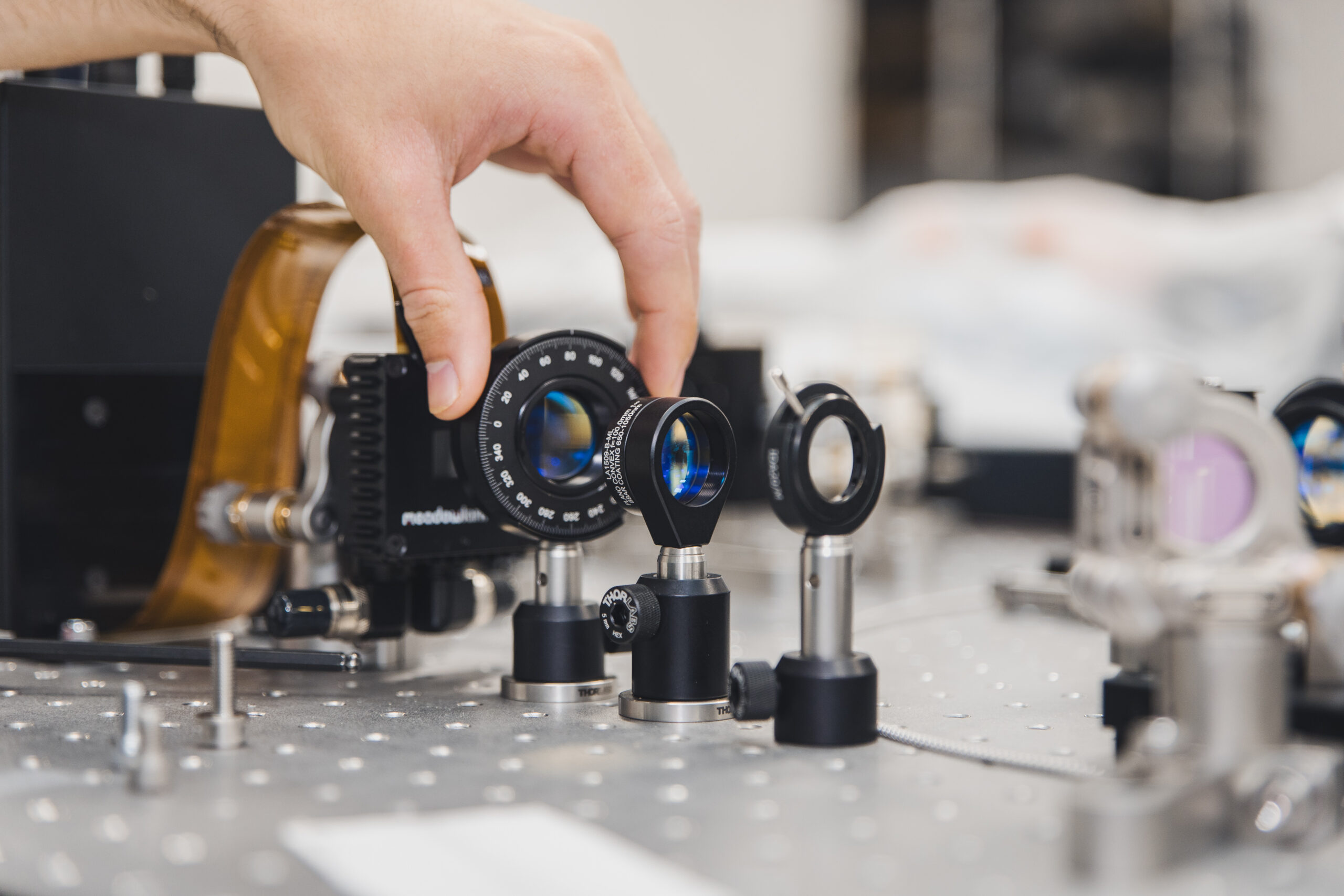
QuantumPUF aims to advance the development of physical unclonable functions (PUFs), which use the unique physical properties of an object to generate an identity that is difficult to reproduce or copy.
The consortium will develop three types of photonic PUFs: classical, quantum-readout and fully quantum systems. These devices will use luminescent materials, including hybrid organic–inorganic nanoparticles and lanthanide-based complexes, whose optical properties can encode information through spectral, spatial and temporal characteristics.
The project also aims to develop scalable manufacturing techniques, such as inkjet printing, and portable optical reading systems that could be integrated into smartphones. These technologies could enable practical authentication of products, documents and physical devices, offering an alternative to conventional identification mechanisms.
A four-year European collaboration
Coordinated by Portugal’s Instituto de Telecomunicações, QuantumPUF brings together seven partners from Portugal, Spain, Germany, Switzerland and Croatia. The project has a total budget of approximately €3 million, funded through the European Union’s Horizon Europe programme, with around €300,000 allocated to the University of Vigo.
Running for four years, the project brings together expertise in materials science, photonics, quantum technologies and cryptography to develop authentication solutions that are more secure, portable and efficient, while also considering environmental impact.
For the VQCC, participation in QuantumPUF strengthens its international research profile and creates new opportunities for interdisciplinary collaboration in quantum technologies and security.
Project website: Home | QuantumPUF
Also read the new here: A UVigo lidera a investigación sobre requisitos de seguridade dun proxecto europeo de loita contra as falsificacións | Universidade de Vigo