Facilities
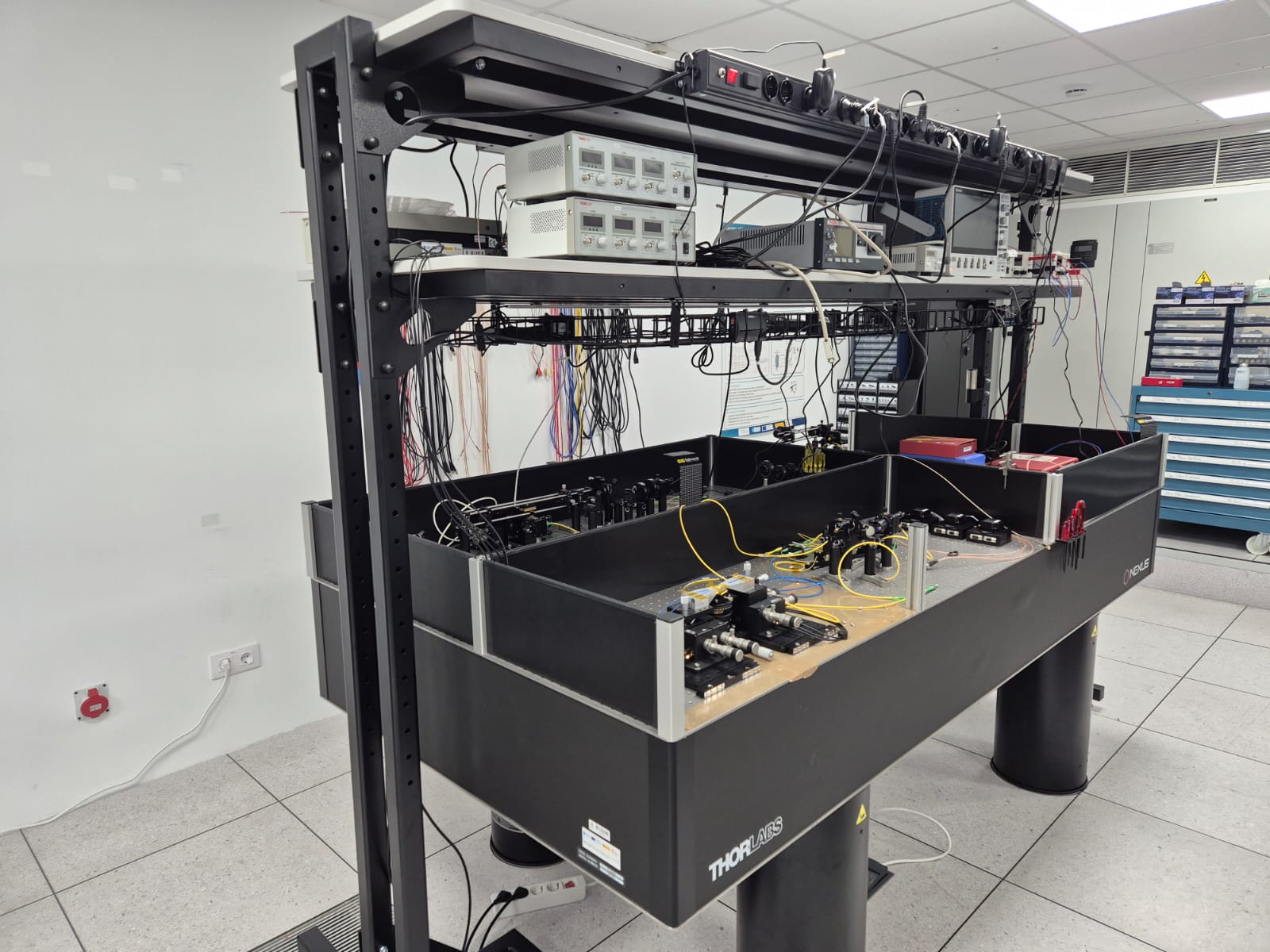
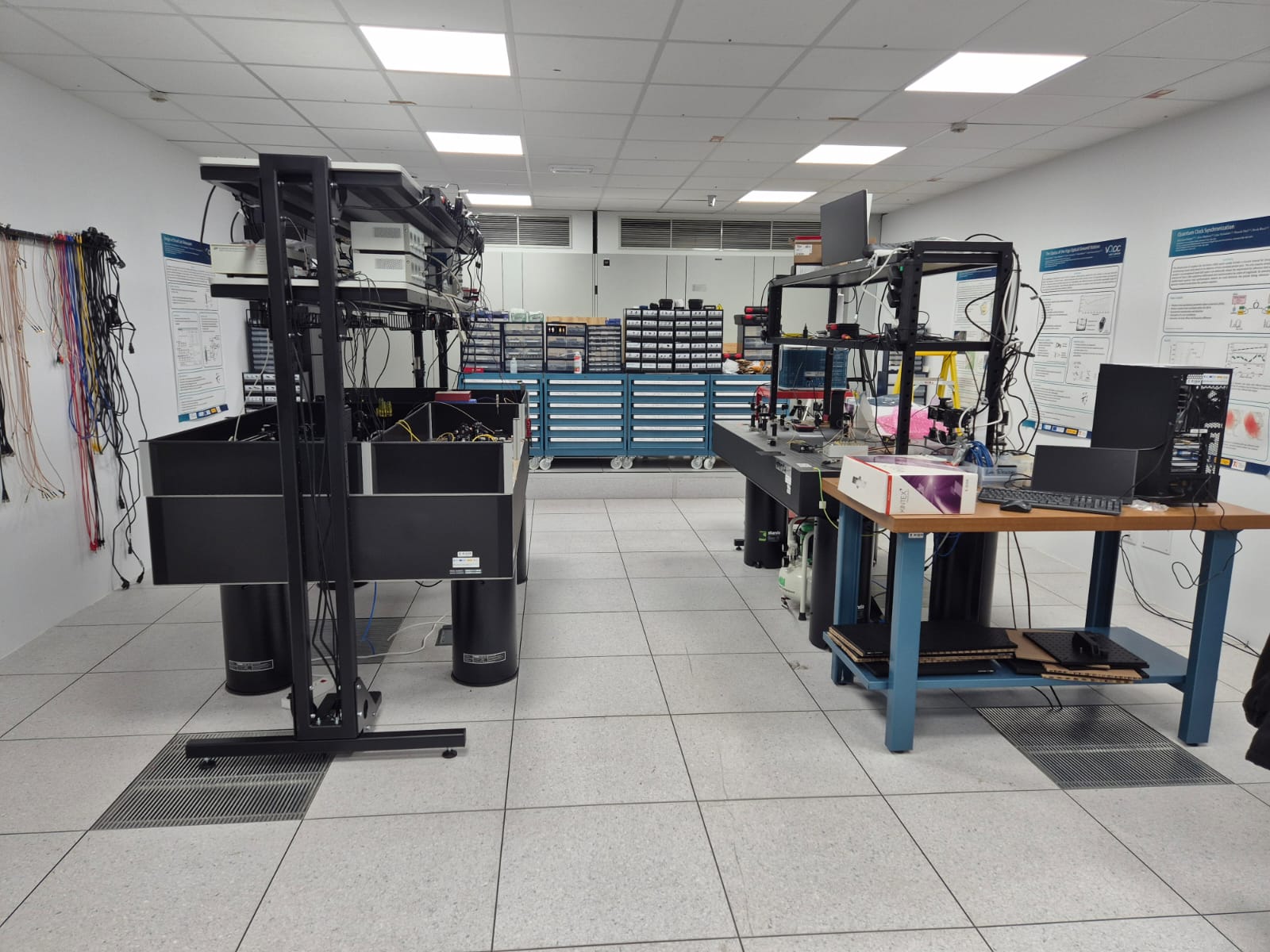
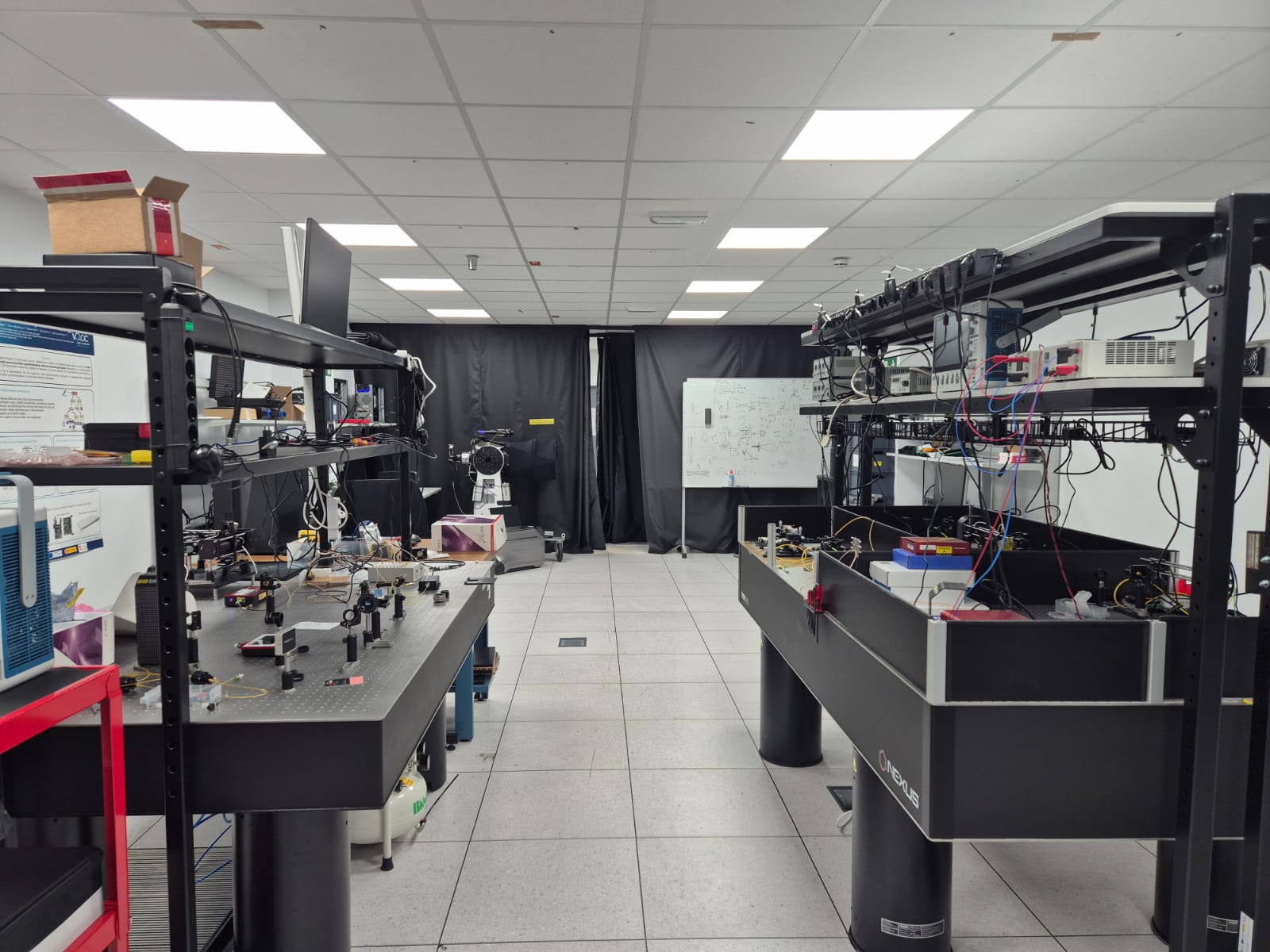
The satellite quantum lab features all of the equipment needed for quantum optical experiments in general and satellite-based quantum communication in particular.
We produce quantum states-of-light using diode lasers and photon-pair sources based on bulk PPKTP. The photon pairs produced are entangled in the polarization degree-of-freedom with one photon in the NIR and the other in the Telecom wavelength range.
For the detection of quantum states-of-light we employ various single-photon detectors for the NIR and Telecom wavelength ranges. Our NIR avalanche photodiodes feature up to 38 MHz count rates, 60 Hz dark counts, and 25 ns dead time. Our superconducting nanowire single photon detectors offer 85% detection efficiency, 25 ps timing jitter, and 10 ns dead time for photons around 780nm and 1550nm. The detectors are paired with state-of the art time taggers with down to 4 ps timing jitter and 90 MHz maximum detection rate.
To further analyze light we employ beam profilers and spectrometers for the NIR and Telecom wavelength ranges. We are in the process of building a single-photon spectrometer.
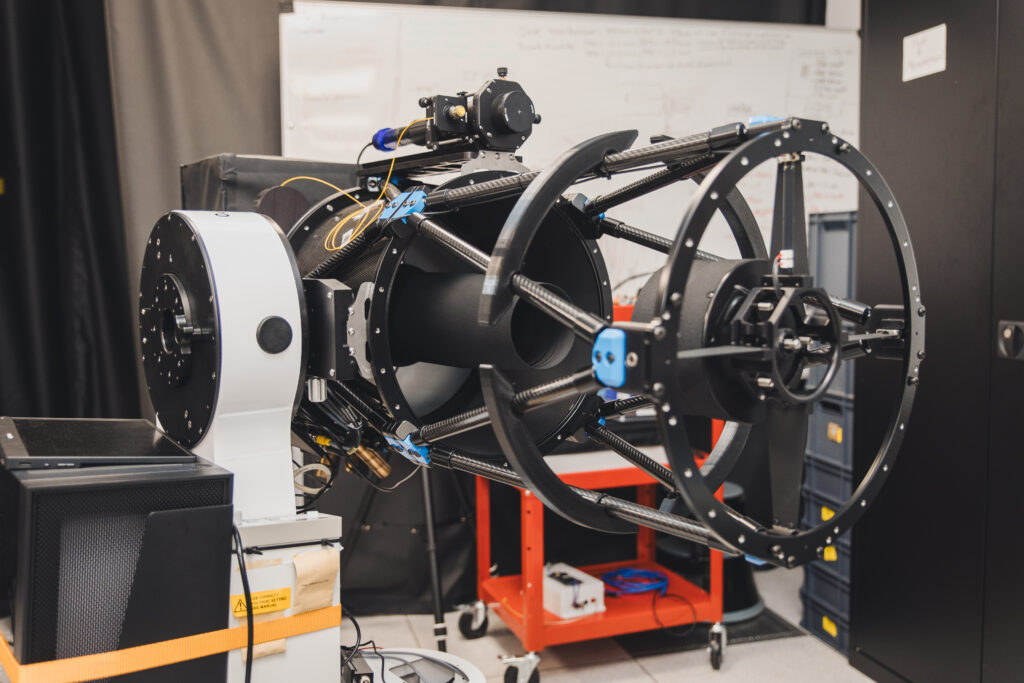
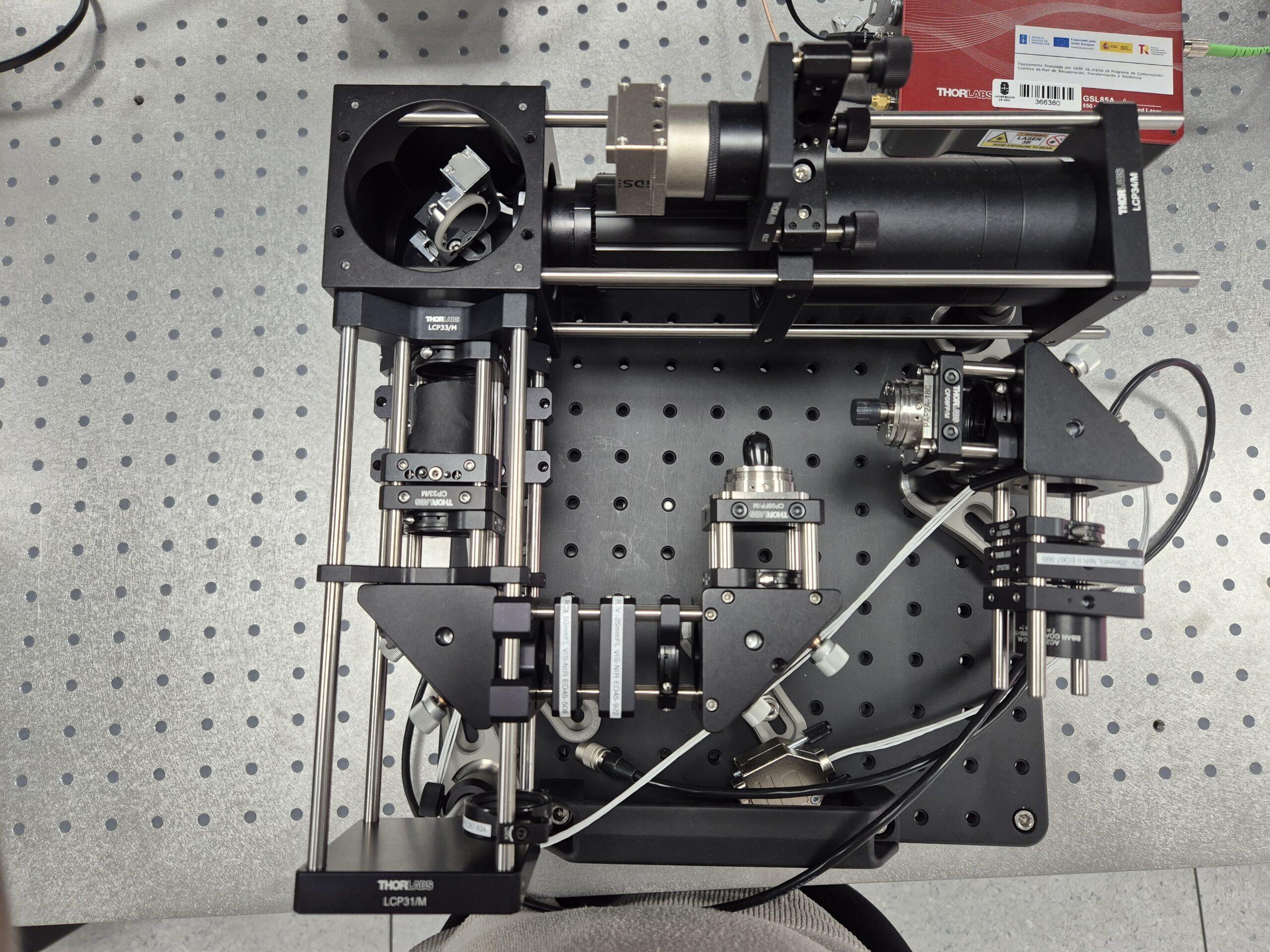
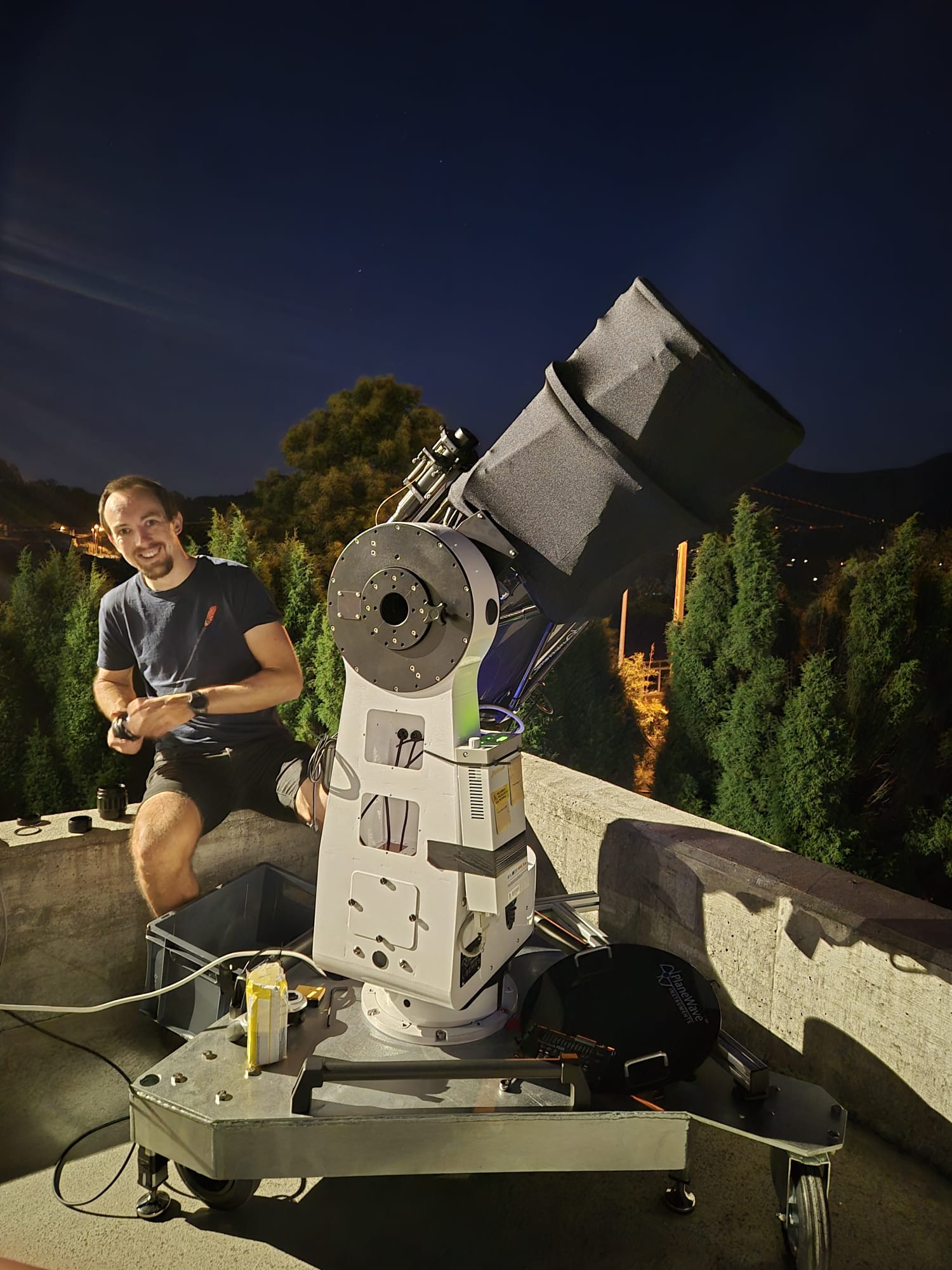
Our main instrument for satellite-based quantum communication is our quantum optical ground station (put here link to OGS website). Additionally, we use two mobile optical ground stations with 37cm telescopes, fast-steering mirrors and position-sensitive detectors. We can move them to suitable locations using a trailer. To test free-space quantum communication protocols on a smaller scale or in the lab, we designed telescopes based on 2-inch optics, that nonetheless feature closed loops with fast-steering mirrors and quadrant detectors.
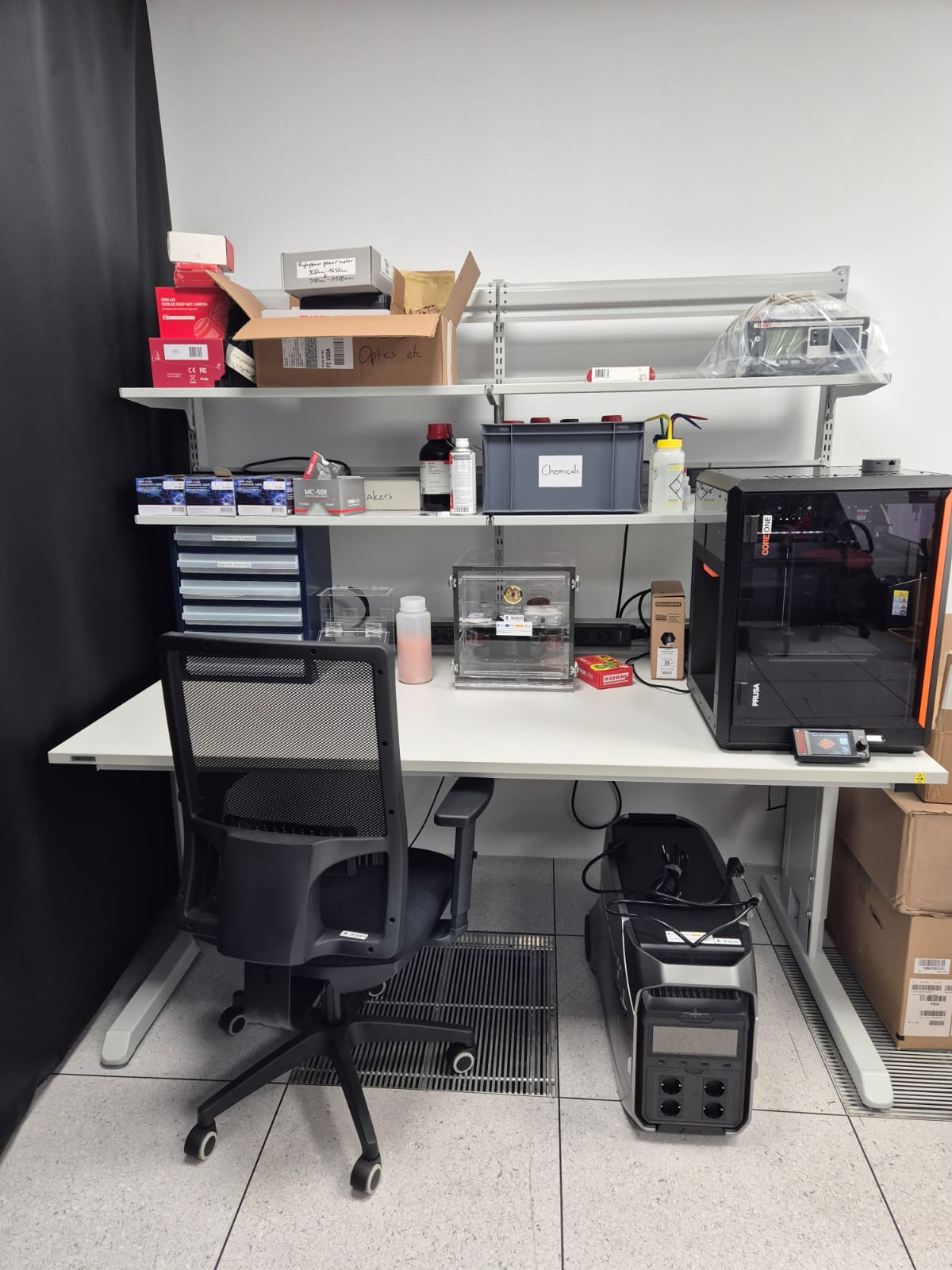
To support our work, we make use of the optics simulation software Optic Studio Zemax and the atmosphere simulation software MODTRAN. Our favorite toy for quick prototyping and quasi-permanent fixes is our 3D printer.

Video


